
1972 Eisenhower Dollar Value
Introduction
The 1972 Eisenhower Dollar, named after the 34th President of the United States, Dwight D. Eisenhower, is a fascinating coin for both numismatists and casual collectors. Struck between 1971 and 1978, the Eisenhower Dollar was the last large-size dollar coin issued for circulation in the United States. The 1972 issue is particularly noteworthy due to its striking variations and historical significance. Here’s what you need to know about this interesting coin, including its mintage details and specifications. The 1972 silver dollar value is often researched by collectors looking to understand its market worth and silver content.
Coin Specifications
| Feature | Description |
|---|---|
| Year of Issue | 1972 |
| Composition | Clad (Copper-Nickel), Silver (40%) |
| Diameter | 38.1 mm |
| Weight | 22.68 grams (Clad), 24.59 grams (Silver) |
| Edge | Reeded |
Mintage Data (1972):
- Philadelphia (No Mint Mark): 75,890,000
- Denver (D): 92,548,511
- San Francisco (Proof, S): 1,811,631 (Clad), 1,872,801 (Silver)
If you want to quickly check your coin worth, try the coin identifier app available for Android users. The 1972 Eisenhower Dollar remains a collectible piece, not only because of its design and historical contexts but also due to variations and errors that keen collectors can uncover.
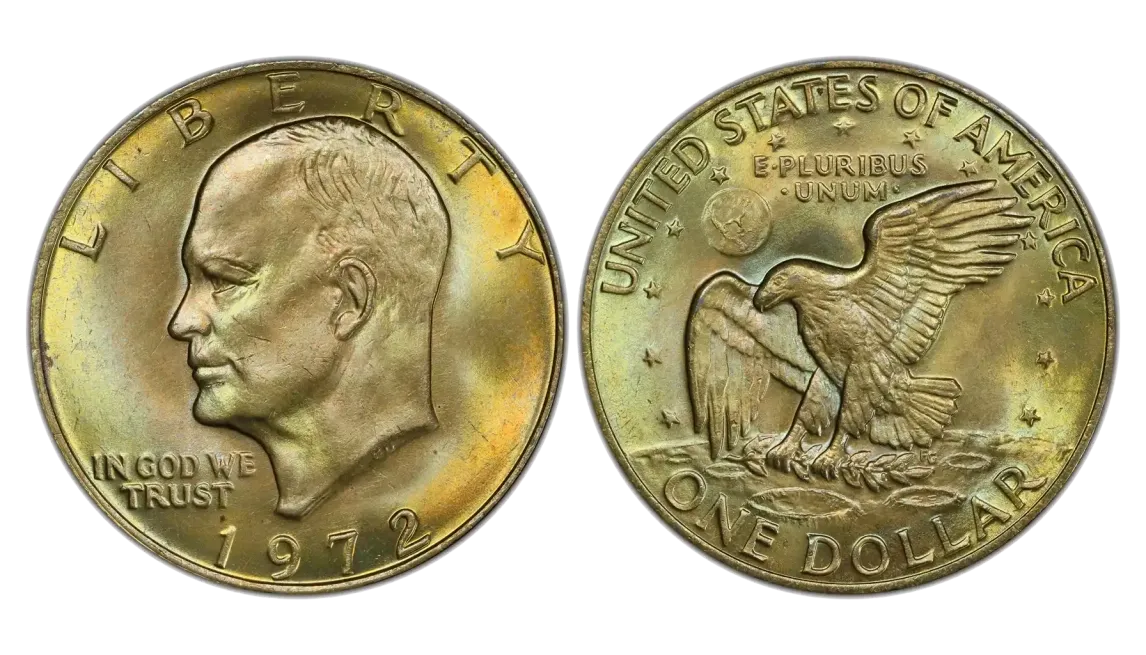
1972 Eisenhower Dollar Value
Price Disclaimer: The values provided here are approximate retail ranges that may fluctuate based on grade, grading service, auction results, and current market demand.
| Condition | Average Value (USD) |
|---|---|
| Circulated | $1.00 – $4.00 |
| Uncirculated (MS60–MS66) | $5.00 – $20.00 |
| High-Grade Uncirculated (MS67+) | $100.00 – $250.00 |
| Proof – Clad (proof mint) | $6.00 – $15.00 |
| Proof – Silver | $12.00 – $45.00 |
| Error Coins | $50.00 and up |
Factors That Influence the Value
Mint Mark and Mintage: The 1972 Eisenhower Dollar was struck at three mints: Philadelphia (no mint mark), Denver (D), and San Francisco (S). Coins from each mint have differing levels of scarcity, impacting their individual values.
Condition and Grade: Utilizing the Sheldon Scale, which ranges from 1 to 70, the condition and assigned grade of a coin significantly influence its value. Coins that are in top mint state condition (MS67 or higher) tend to command the highest premiums.
Metal Composition: The Eisenhower Dollar was produced in two varieties — a standard copper-nickel clad and a special silver-clad version. While the clad coins were made for general circulation, the silver issues were primarily for collectors, thus affecting their market value.
Errors and Varieties: Coins featuring verified mint errors, such as die chips, doubling, or missing elements, often attract interest from collectors and garner premiums above standard catalog values. Verification by reputable grading services enhances the authenticity and desirability of such pieces.
Rarity and Errors of the 1972 Eisenhower Dollar Value
The 1972 Eisenhower Dollar is a collectible coin that carries a fascinating legacy due to its unique errors and varieties. These errors significantly influence the coin’s value and are highly sought after by collectors. Let’s explore some of the notable errors found in the 1972 Eisenhower Dollar series.
One-Dollar Type 2 Reverse
Unique to the Philadelphia Mint, the Type 2 reverse error was generated by a die designed for a different purpose, resulting in the Earth appearing above the eagle on the reverse side of the coin. Cherished for its rarity, this error can fetch between $275 – $650+ depending on the condition, with “Very Rare” status among collectors.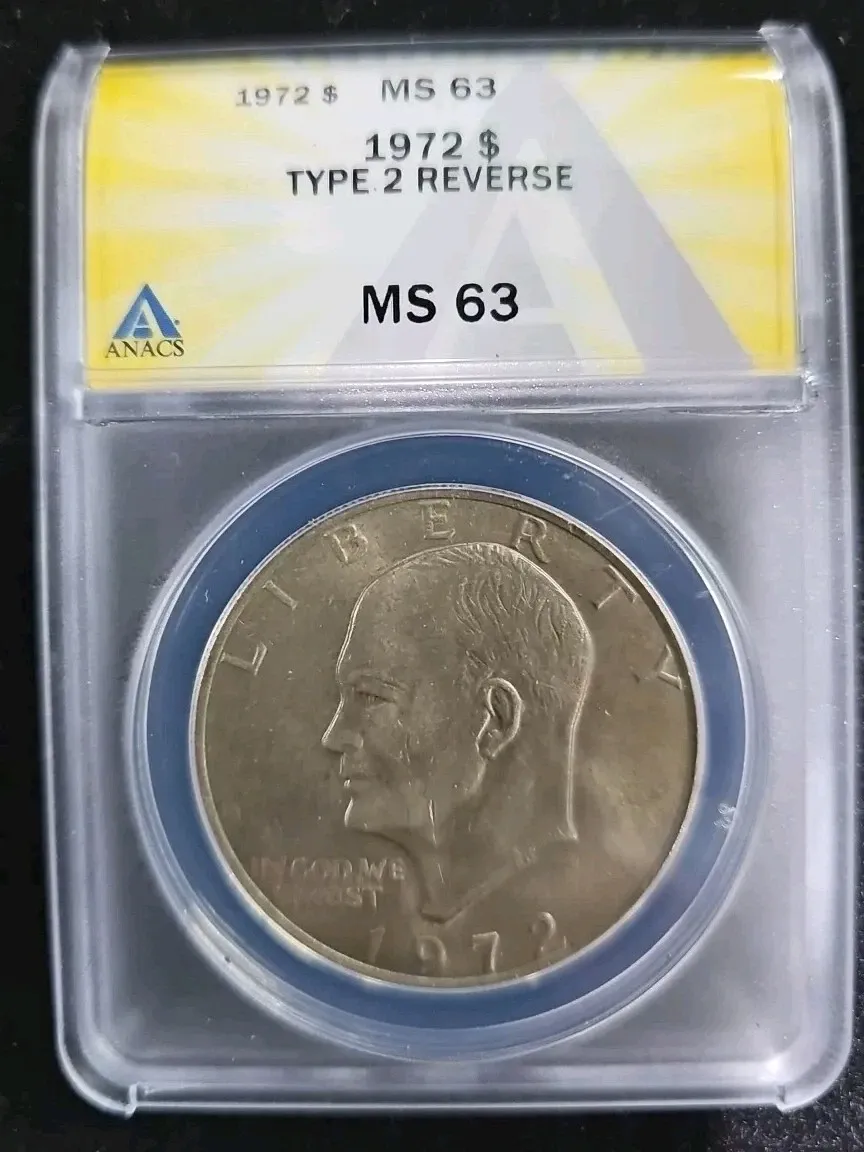
Struck Through Errors
Struck through grease or debris errors occur when foreign material obstructs the die during striking, leaving distinctive marks on the coin’s surface. Values for these errors can range from $50 – $150+, with a “Uncommon” classification.
Double Die Obverse
Double die obverse errors are formed by slight shifting of the die between strikes, causing visible doubling in design elements. This intriguing error often commands a price of $100 – $300+ and is considered “Rare”.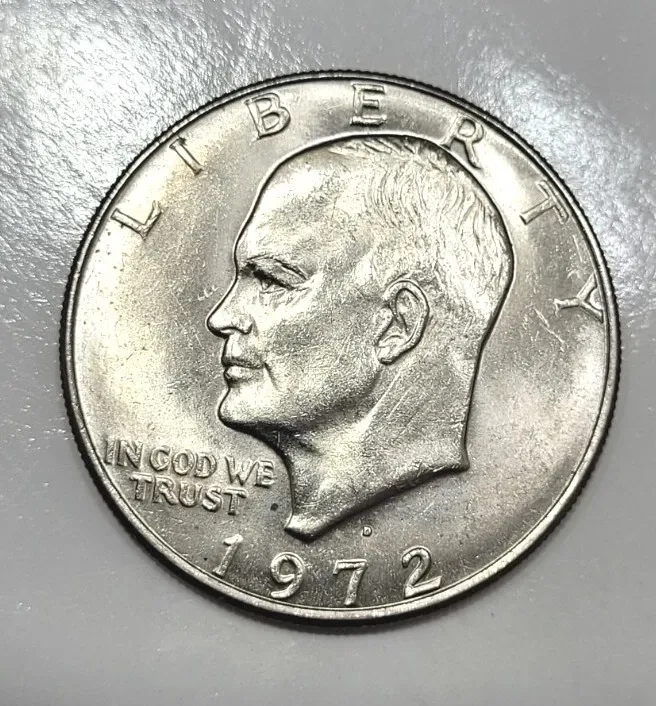
Clipped Planchets
A clipped planchet error shows a portion of the coin’s edge missing, typically caused by a malfunction during the cutting process. These coins are considered “Common” yet popular, bringing in $15 – $60+ depending on the extent of the clip.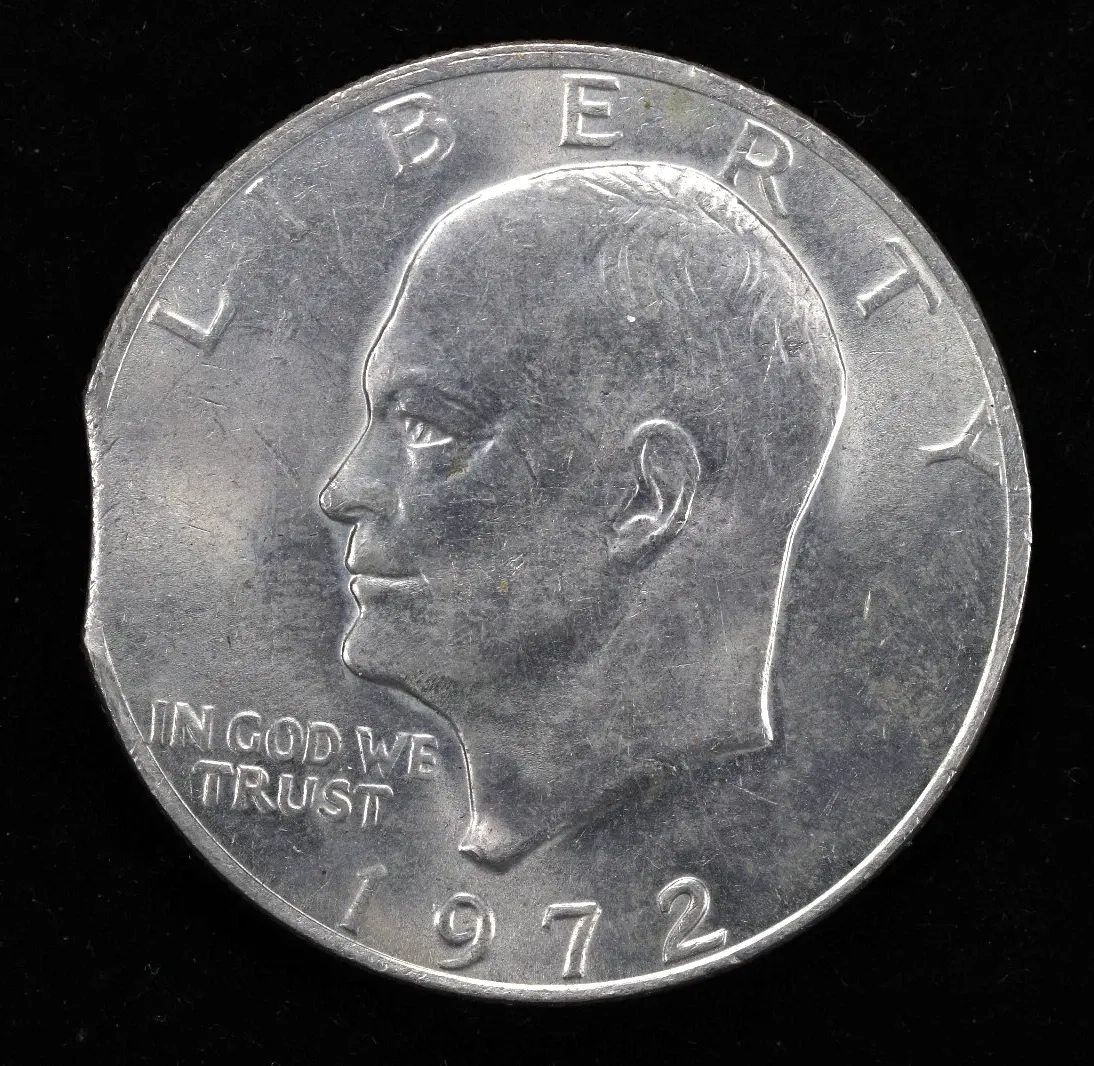
Off-Center Strikes
Off-center strike errors occur when the coin is not properly aligned in the collar, resulting in an off-center impression. This visually appealing error holds values from $100 – $400+ and is “Uncommon” in rarity.
Price Impact Summary
 Minor Errors: Minor errors such as small die chips or light defects may add modest premiums to the coin’s base value.
Major Errors: Dramatic or visually obvious errors, such as the Type 2 reverse or significant off-center strikes, greatly impact the value, making these variants appealing and valuable to collectors.
Condition Impact: Higher grades in Mint State categories enhance the desirability and value of error coins significantly.
Authentication: Due to the nature of rare errors, authentication by trusted third-party services such as PCGS or NGC is essential. These verifications not only confirm the legitimacy but also add market credibility to the coin’s provenance, ensuring collectors buy with confidence.
The errors found in the 1972 Eisenhower Dollar add to its historical intrigue and collector desirability, offering both a rich learning experience and a potential to own a piece with an unusual story.
Mint Marks & Mintage
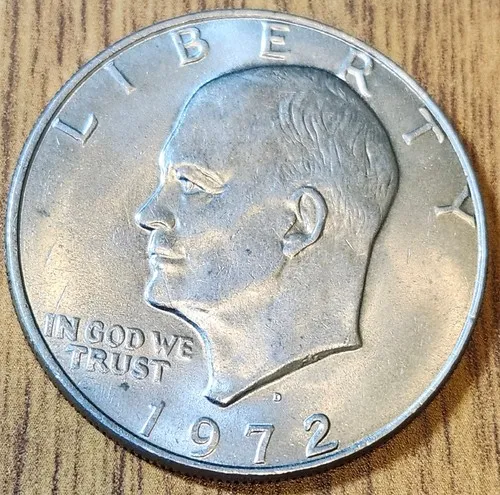
When exploring the 1972 Eisenhower Dollar, collectors often pay close attention to the mint marks and mintage numbers as they directly affect a coin’s availability and potential value. The mint mark, which indicates where the coin was produced, can be found just below Eisenhower’s neck on the obverse side.
Understanding Mint Marks
For 1972, the Eisenhower Dollar was produced in three mints: Philadelphia (no mint mark), Denver (D), and San Francisco (S). Each mint contributed to the overall production as follows:
| Mint Location | Mint Mark | Mintage (approx.) |
|---|---|---|
| Philadelphia | No Mint Mark | 75,890,000 |
| Denver | D | 92,548,511 |
| San Francisco | S | 2,193,056 |
Philadelphia coins bear no mint mark, which can lead some collectors to initially overlook their origin, but understanding the significance of their absence is key to evaluating these coins properly.
Significance of the Mint Marks
The mint mark not only helps in identifying the coin’s origin but its potential scarcity. The 1972 Eisenhower dollars from the San Francisco Mint, for instance, possess lower production figures primarily due to their Proof and collectible status which were sold directly by the U.S. Mint to collectors.
Mintage and Availability
Understanding mintage numbers offers insight into the relative scarcity of each variant, which in turn influences the value of individual coins. Typically, coins with lower production numbers, such as those from San Francisco, will be more sought after in higher grades than those minted in larger numbers in Philadelphia and Denver. Collectors keen on adding to their Eisenhower Dollar collection should be aware of these nuances to make informed purchasing decisions.
1972 Eisenhower Dollar Value Facts and Trivia
Design Details
The obverse of the 1972 Eisenhower Dollar, crafted by Frank Gasparro, features a right-facing portrait of President Dwight D. Eisenhower. On the reverse, the coin showcases a striking image of an eagle landing on the Moon, a tribute to the Apollo 11 mission. This design was also inspired by Gasparro’s earlier work on the Susan B. Anthony Dollar, featuring the same reverse design theme. Inscriptions on the coin include “LIBERTY,” “IN GOD WE TRUST,” and the year “1972.”
Release Information
Released in 1972, the Eisenhower Dollar was an important installment in the Eisenhower Dollar series, which highlighted American achievements in space exploration and honored the 34th President of the United States. Although not composed of silver for general release, the coin held historical and cultural significance due to its connection to Eisenhower’s contributions to both military and space initiatives.
Quick Facts
- The 1972 Eisenhower Dollar was the first U.S. dollar coin issued since the Peace Dollar production ended in 1935.
- Due to its large size and weight, it was often referred to as the “Ike Dollar,” popular among collectors for its substantial feel.
- Some varieties of the 1972 Ike Dollar are highly sought after, especially Type 2, due to its sharp relief of the Earth on the reverse.
Collecting the 1972 Eisenhower Dollar
For numismatists eager to expand their collections with unique pieces from the early 1970s, the 1972 Eisenhower Dollar presents an intriguing opportunity. By following a strategic collecting approach, enthusiasts can appreciate both the historical significance and numismatic value of this iconic coin.
1. Identify the Variants
Begin by gaining a comprehensive understanding of the different types of 1972 Eisenhower Dollars. Familiarize yourself with the Type 1, Type 2, and Type 3 reverse design variations. Each variant has distinct features and varying degrees of rarity.
2. Learn the Mintage Details
Delve into the mintage figures and historical context of the 1972 Eisenhower Dollar. Recognize where each subset was minted—Philadelphia, Denver, or San Francisco. This knowledge can help identify the more scarce issues, potentially increasing collection value.
3. Assess the Condition
The condition of each coin is paramount for assessing its value. Utilize the Sheldon Scale, which ranges from 1 to 70, to evaluate your coins. Higher-grade specimens, particularly those graded MS67 or above, can carry a premium over lower-grade examples.
4. Consider Grading and Authentication
For serious collectors, acquiring coins that have been authenticated and graded by reputable services such as PCGS or NGC can enhance the investment’s credibility. Displaying a third-party grading certificate can also provide peace of mind about the coin’s condition and authenticity.
5. Explore Error Coins
Don’t overlook the potential allure of error coins from the 1972 Eisenhower Dollar series. Look for unique anomalies such as die chips or doubling, verifying their status with professional assessments to ensure they are genuine. Error coins may command a higher market price due to their rarity.
6. Connect with the Community
Engage with fellow collectors through coin shows, online forums, and local numismatic associations. Sharing insights and learning from other enthusiasts can provide valuable tips and keep you informed on market trends, helping you become a more adept collector.
7. Monitor Market Trends
Regularly keep track of the market trends related to Eisenhower Dollars. Stay informed about auction results and retail prices to understand how different grades and variants are performing. This practice allows you to make informed decisions about buying and selling within your collection.
By following these steps, collectors can not only enjoy the historical and aesthetic aspects of the 1972 Eisenhower Dollar but also make informed decisions that could enhance the overall value of their collections.
Frequently Asked Questions About the 1972 Eisenhower Dollar
How much is a 1972 Eisenhower Dollar worth today?
The value of a 1972 Eisenhower Dollar largely depends on its condition, mint mark, and whether it is a standard or a silver proof version. Circulated coins typically range from $1.25 to $3, whereas uncirculated or proof versions could be worth significantly more.
What makes a 1972 silver dollar rare?
The rarity of a 1972 silver dollar can be attributed to error varieties, such as the Type 2 reverse which was mistakenly used for some Philadelphia-minted coins. This error increases the coin’s desirability and value among collectors.
Where is the mint mark located on a 1972 Eisenhower Dollar?
You can find the mint mark on the 1972 Eisenhower Dollar on the obverse, just below President Eisenhower’s neck. The absence of a mint mark indicates it was minted in Philadelphia.
How can I determine the type of my 1972 silver dollar?
To identify the type of your 1972 silver dollar, inspect the reverse of the coin. Type 1 features a low relief and rough appearance, Type 2 has a high relief with a more detailed earth, and Type 3 combines the best features of both.
What is the value of a 1972 silver dollar without a mint mark?
A 1972 silver dollar without a mint mark was minted in Philadelphia. Its value can range from $1.25 to $3, but the Type 2 variety with this feature can be worth over $50 due to its rarity.
Are all 1972 Eisenhower Dollars made of silver?
No, not all 1972 Eisenhower Dollars are made of silver. Standard circulation coins are composed of a copper-nickel clad, while some special collector’s versions, such as those included in silver proof sets, contain 40% silver.
How can errors affect the value of a 1972 Eisenhower Dollar?
Errors, like the mis-struck Type 2 reverse on some Philadelphia coins, can significantly increase the value of a 1972 Eisenhower Dollar. Collectors often pay premiums for coins with unique or rare errors, depending on their visibility and unique attributes.
Do 1972 Eisenhower Dollars have any historical significance?
Yes, the Eisenhower Dollar holds historical significance as it was issued to honor President Dwight D. Eisenhower and commemorate the Apollo 11 moon landing, making it the first dollar coin issued by the U.S. Mint after the Peace dollar.
How should I store my 1972 Eisenhower Dollar to maintain its value?
To preserve your 1972 Eisenhower Dollar, storing it in a dry environment and using a protective holder, such as a coin capsule or a non-PVC flip, will help prevent tarnishing and physical damage, thus maintaining its value.
What distinguishes a 1972 Eisenhower uncirculated silver dollar from others?
A 1972 Eisenhower uncirculated silver dollar is distinguished by its higher quality strike and may come with a special mint packaging. These coins often contain silver and are valued higher by collectors, especially when preserved in pristine condition.